 Linkedlytics
For ghostwriters
Show clients what their LinkedIn content is doing for them.
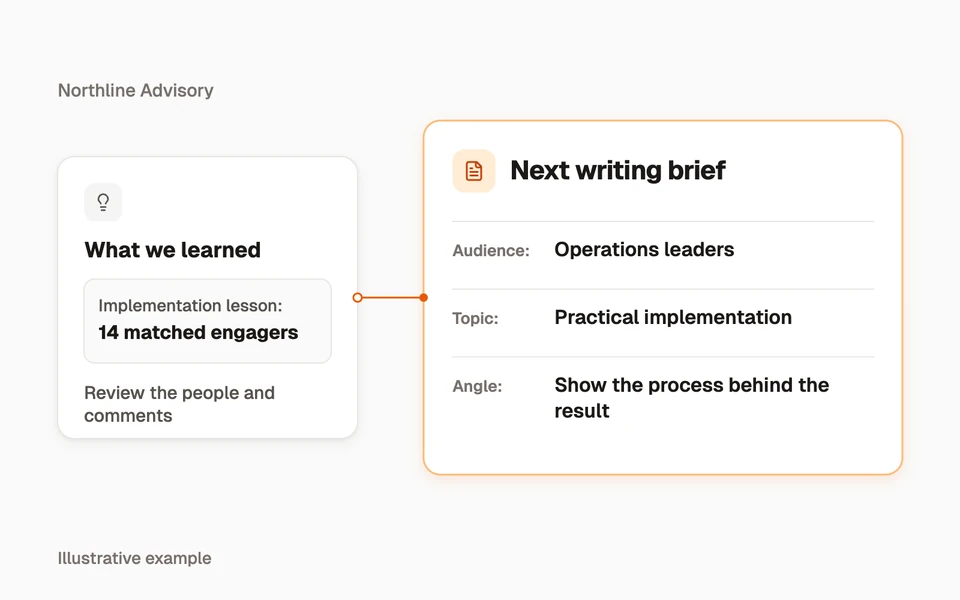
Bring evidence to the monthly review. Explain what you published, which ideas resonated with the observed audience, and how those findings shape the next writing brief.
01
Start with the brief
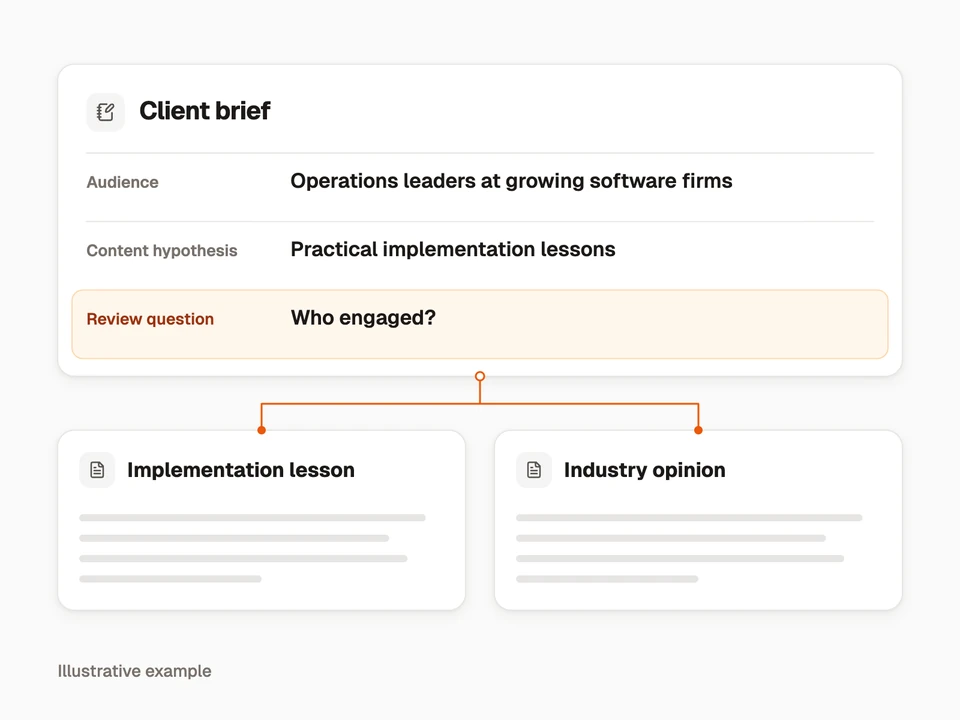
Start with the client’s objective and intended audience. A technical founder building credibility with engineering leaders needs a different interpretation from an executive trying to reach potential hires.
Write down the audience criteria before evaluating the month. Otherwise, it is too easy to redefine success around whichever post happened to receive the most impressions.
02
Explain what changed
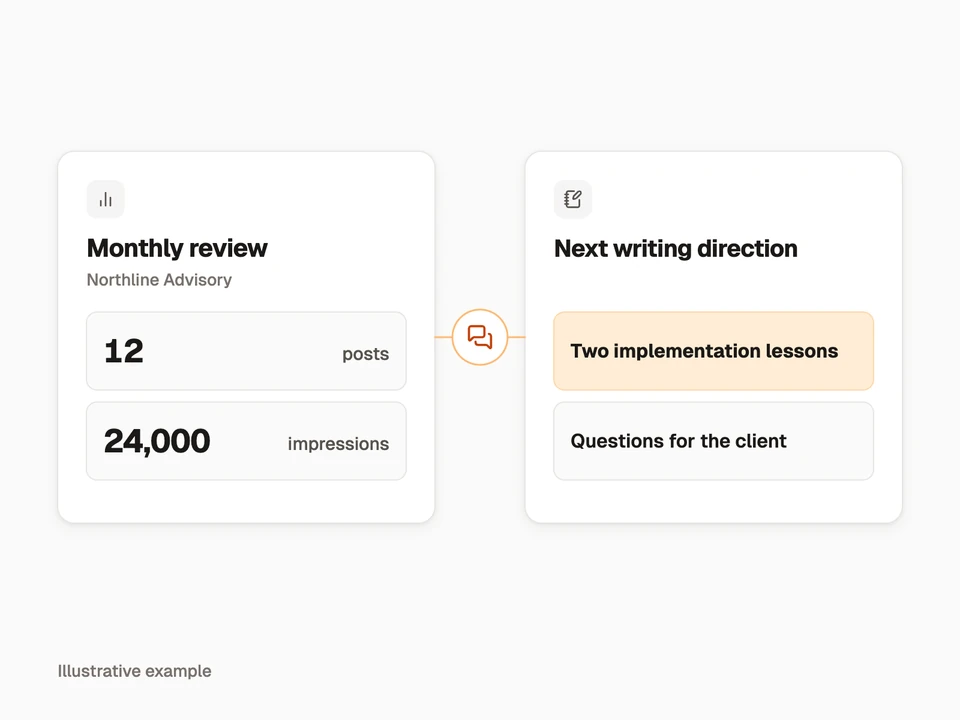
Show the volume of work, a few representative posts, the available audience evidence, and the next topics you recommend. Include a weaker post when it teaches something useful.
Separate results you can observe from outcomes that depend on distribution, sales follow-up, or the client’s offer. A content report should not claim revenue without attribution evidence.
| Conversation | Evidence | Next writing decision |
|---|---|---|
| What did we deliver? | Published posts and topics. | Check the mix against the brief. |
| What held attention? | Available impressions and interactions. | Review the hooks and examples. |
| Who responded? | Observed engagers and audience criteria. | Adjust specificity and topic selection. |
| What should change? | A hypothesis supported by examples. | Set the next brief and review date. |
03
Keep clients in the loop
The client authorizes the relevant LinkedIn connection. Organize profiles and reports in the appropriate workspace, and choose the information included in the shared report.
When your practice grows, use separate client contexts rather than combining unrelated audiences into a single result.
04
Explore your data with AI
A supported MCP client can help compare available data and draft a report summary. Keep the target workspace, profile, and dates explicit, then review the interpretation before it becomes client advice.
The writing voice, judgement, and relationship remain part of your service. The data helps you explain the reasoning behind your next recommendation.
Questions, answered
Can I manage more than one client?
Yes. Workspaces and profile selection support recurring work across clients. Software billing is based on connected profiles; a client may have more than one profile.
Can the report prove that my writing generated sales?
Only when you have separate evidence connecting the content to those sales. Reach, engagement, and ICP fit are useful signals, but they do not establish revenue attribution on their own.
Show clients what’s working
Start your free trial to review content performance, explore audience fit, and prepare your next client report.
Start a trial to report on your client’s content14-day free trial