 Linkedlytics
Audience analytics
See whether your content attracts the people you want to reach.
Look beyond a total engagement count. Use available engager information and your ideal customer profile to understand audience fit and make a more informed content decision.
01
Reach and relevance
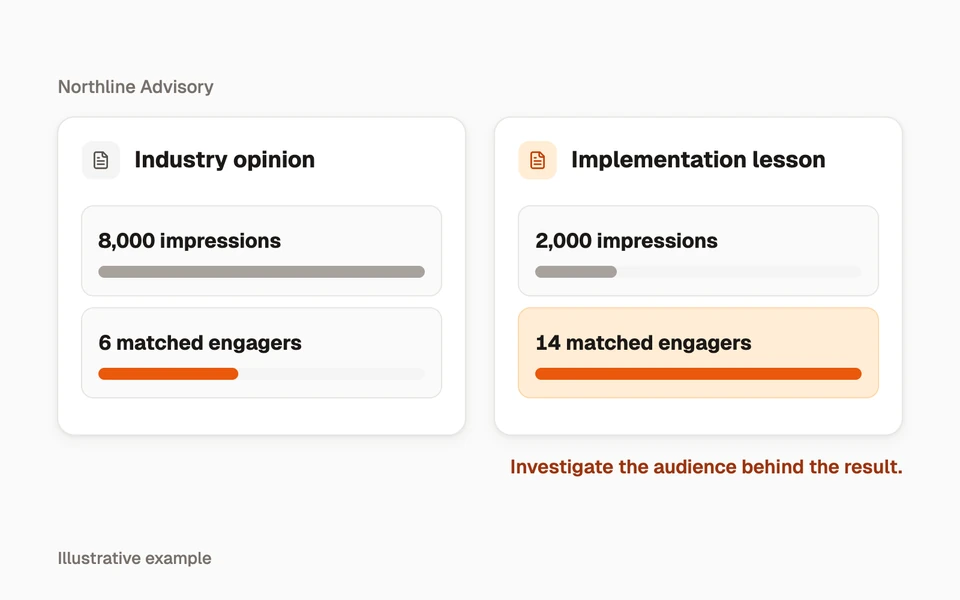
A broad topic can attract a large audience. A specialist example may reach fewer people while starting conversations with the people you care about. Inspect both outcomes before deciding which post worked.
Linkedlytics helps you explore the audience information available for collected engagement. This is not a demographic census of everyone who saw a post.
Synthetic example · not a benchmark
A smaller, relevant audience
- Post A
- 8,000 impressions · 6 matched engagers
- Post B
- 2,000 impressions · 14 matched engagers
- Interpretation
- Investigate B’s topic and audience context
02
Know your audience metrics
Use the population and time window attached to each result. A person may appear across several posts, so adding post-level unique counts does not necessarily give a unique monthly audience.
| Metric | What it tells you | What it does not tell you |
|---|---|---|
| Impressions | Displays reported for the content. | A unique count of people. |
| Engagement activity | Recorded reactions, comments, or other defined interactions. | A count of distinct people unless deduplicated. |
| Unique engagers | Distinct observed people within the selected scope. | Every follower, viewer, or person reached. |
| ICP-matched engagers | Observed people assessed against your target criteria. | Verified buying intent or a qualified opportunity. |
| First-time engagers | People first observed within the available collection history. | That they have never interacted before that history. |
03
Define your target audience
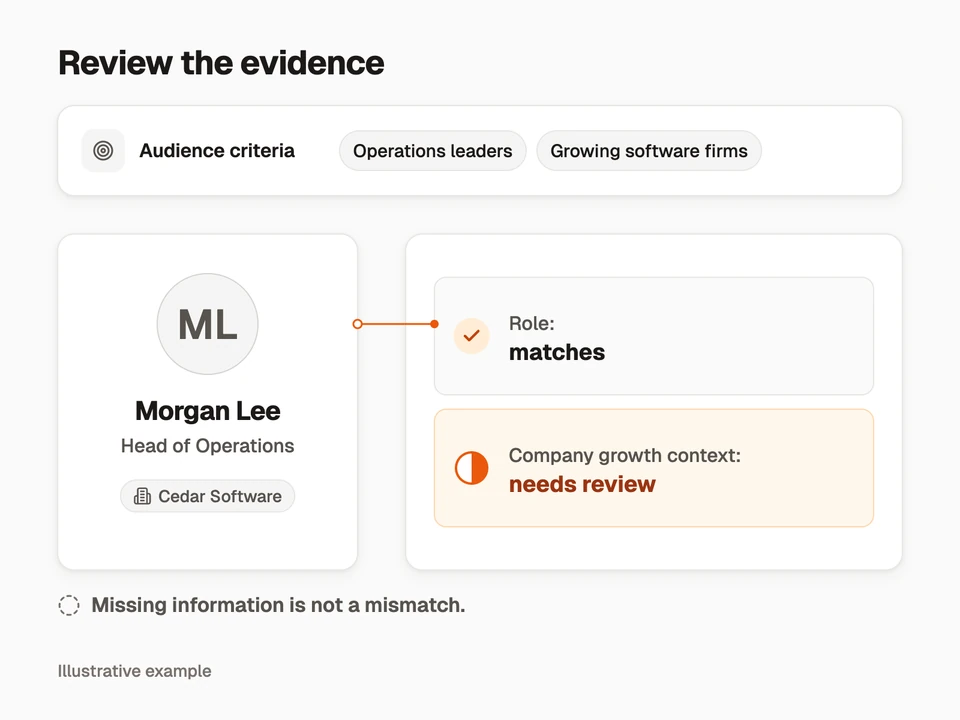
Define the attributes that matter to your client or business, then review the available profile evidence behind a match. Missing data and ambiguous job titles can affect the assessment.
Revisit the criteria when the positioning changes. A different ICP definition can change the interpretation even when the underlying post activity has not changed.
- Describe the roles and business context you want to reach.
- Review the evidence behind important classifications.
- Keep missing information distinct from a confirmed mismatch.
04
Put audience insights to use
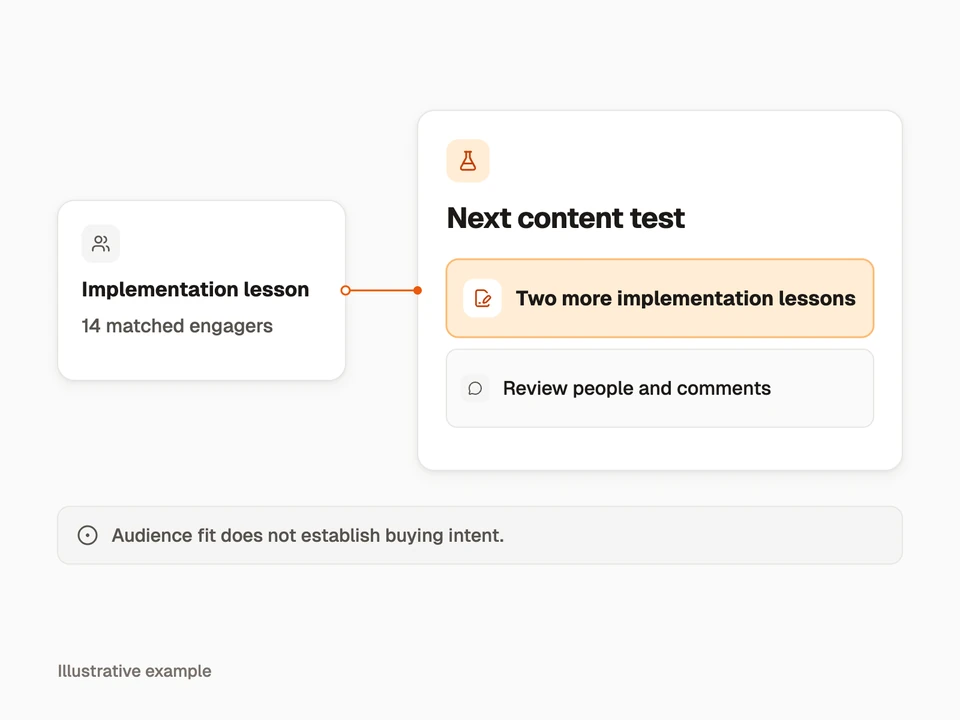
Show audience fit alongside performance, with the definition and limitations visible. A stronger report explains why a topic deserves another test rather than equating every reaction with a potential customer.
Standard includes audience and ICP reporting. Pro adds outreach workflows; contacting someone is a separate action with its own access and review requirements.
Questions, answered
Does this analyse everyone who viewed my posts?
No. Engager analysis covers people represented in the collected engagement data. Viewers, followers, and people reached are different populations, and coverage varies by metric.
Are ICP matches automatically leads?
No. A match means the available information aligns with configured audience criteria. Buying intent, consent to a conversation, and commercial qualification require separate consideration.
Know who’s engaging
Start your free trial to explore observed engagers and assess audience fit against your own criteria.
Start a trial to explore your audience7-day free trial